

Quels sont les domaines d'application largement reconnus du carter d'huile ?
Avantages de l’utilisation du tubage pétrolier dans le forage offshore Impact du tubage pétrolier sur l’intégrité des puits et l’efficacité de la production Le tubage pétrolier joue un rôle crucial…
Avantages de l’utilisation du tubage pétrolier dans le forage offshore
Impact du tubage pétrolier sur l’intégrité des puits et l’efficacité de la production
Le tubage pétrolier joue un rôle crucial dans l’industrie pétrolière et gazière, ayant un impact significatif sur l’intégrité des puits et l’efficacité de la production. L’un des domaines d’application les plus appréciés du tubage pétrolier est sa capacité à fournir un support structurel au puits de forage. En enveloppant le puits, le tubage pétrolier aide à empêcher l’effondrement des parois du forage, assurant ainsi la stabilité de la structure du puits. Ce support structurel est essentiel pour maintenir l’intégrité du puits et prévenir tout dommage potentiel pouvant résulter de l’instabilité.
En plus de fournir un support structurel, le tubage pétrolier sert également de conduit pour l’extraction du pétrole et du gaz du réservoir vers la surface. Le boîtier crée un passage étanche à travers lequel les hydrocarbures extraits peuvent s’écouler sans aucune fuite ni contamination. Ce confinement des fluides extraits est crucial pour garantir l’efficacité du processus de production et minimiser les risques environnementaux associés à l’extraction de pétrole et de gaz.
Production d’oléoducsDe plus, le tubage pétrolier joue un rôle essentiel dans la complétion des puits et l’isolation zonale. En isolant différentes formations géologiques au sein du puits de forage, le tubage aide à empêcher le mélange des fluides provenant de différentes zones. Cette isolation zonale est essentielle pour optimiser l’efficacité de la production en permettant une extraction sélective à partir de couches de réservoir spécifiques. Il aide également à contrôler les différences de pression et à maintenir l’intégrité du puits en empêchant la migration des fluides entre les zones.
Un autre domaine d’application clé du tubage pétrolier est sa contribution à la stabilité et à l’intégrité du puits de forage. Le tubage aide à prévenir l’effondrement du puits de forage dû à des pressions externes ou à des formations géologiques. En fournissant une barrière entre le puits de forage et les formations environnantes, le tubage garantit l’intégrité structurelle du puits et minimise le risque d’instabilité du puits de forage. Cette stabilité est cruciale pour la performance globale du puits et la sécurité des opérations.
De plus, le tubage pétrolier joue un rôle essentiel dans le contrôle des puits et la prévention des éruptions. En cas d’incident de contrôle de puits, tel qu’une éruption, le tubage agit comme une barrière principale pour contenir la pression et les fluides à l’intérieur du puits de forage. Ce confinement aide à prévenir les rejets incontrôlés d’hydrocarbures et minimise le risque de dommages environnementaux ou de risques pour la sécurité. L’intégrité du tubage est essentielle pour un contrôle efficace des puits et pour garantir la sécurité du personnel et des équipements sur la plate-forme.
En conclusion, les domaines d’application du tubage pétrolier sont divers et essentiels au bon fonctionnement des puits de pétrole et de gaz. Qu’il s’agisse de fournir un soutien structurel et une isolation zonale, ou encore d’assurer la stabilité des puits de forage et la prévention des éruptions, le tubage pétrolier joue un rôle essentiel dans l’amélioration de l’intégrité des puits et de l’efficacité de la production. Son impact sur la performance globale et la sécurité des opérations pétrolières et gazières ne peut être surestimé, ce qui en fait un élément fondamental de l’industrie.
oil casing plays a crucial role in the Oil and Gas industry, impacting both well integrity and production efficiency significantly. One of the widely-acclaimed application areas of oil casing is its ability to provide structural support to the wellbore. By encasing the well, oil casing helps prevent the collapse of the borehole walls, ensuring the stability of the well structure. This structural support is essential for maintaining the integrity of the well and preventing any potential damage that could result from instability.
In addition to providing structural support, oil casing also serves as a conduit for the extraction of oil and gas from the reservoir to the surface. The casing creates a sealed pathway through which the extracted hydrocarbons can flow without any Leakage or contamination. This containment of the extracted fluids is crucial for ensuring the efficiency of the production process and minimizing any environmental risks associated with oil and gas extraction.
oil Pipe productionFurthermore, oil casing plays a vital role in well completion and zonal isolation. By isolating different geological formations within the wellbore, casing helps prevent the mixing of fluids from various zones. This zonal isolation is essential for optimizing production efficiency by allowing for selective extraction from specific reservoir layers. It also helps in controlling pressure differentials and maintaining well integrity by preventing fluid migration between zones.
Another key application area of oil casing is its contribution to wellbore stability and borehole integrity. Casing helps prevent the collapse of the wellbore due to external pressures or geological formations. By providing a barrier between the wellbore and surrounding formations, casing ensures the structural integrity of the well and minimizes the risk of wellbore instability. This stability is crucial for the overall performance of the well and the safety of operations.
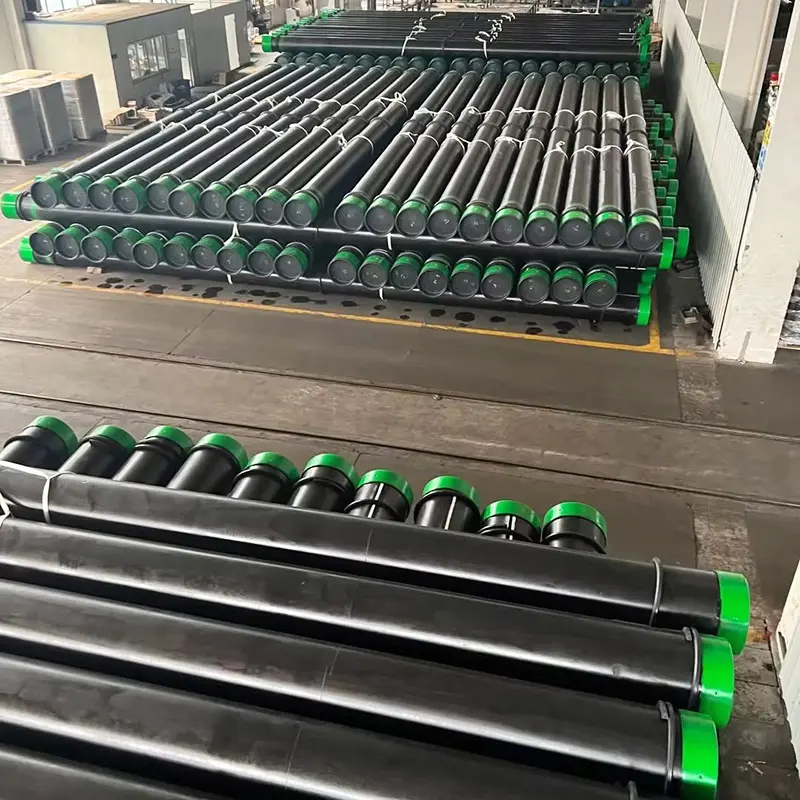
Moreover, oil casing plays a critical role in well control and blowout prevention. In the event of a well control incident, such as a blowout, the casing acts as a primary barrier to contain the pressure and fluids within the wellbore. This containment helps prevent uncontrolled release of hydrocarbons and minimizes the risk of environmental damage or safety hazards. The integrity of the casing is essential for effective well control and ensuring the safety of personnel and equipment on the rig.
In conclusion, the application areas of oil casing are diverse and essential for the successful operation of oil and gas wells. From providing structural support and zonal isolation to ensuring wellbore stability and blowout prevention, oil casing plays a critical role in enhancing well integrity and production efficiency. Its impact on the overall performance and safety of oil and gas operations cannot be overstated, making it a fundamental component of the industry.