

Wat zijn de alom geprezen toepassingsgebieden van olieomhulsels?
Voordelen van het gebruik van oliemantels bij offshore-boringen Oliemantels spelen een cruciale rol bij offshore booroperaties en bieden een reeks voordelen waardoor het alom geprezen wordt in verschillende toepassingsgebieden. Een…
Voordelen van het gebruik van oliemantels bij offshore-boringen
Oliemantels spelen een cruciale rol bij offshore booroperaties en bieden een reeks voordelen waardoor het alom geprezen wordt in verschillende toepassingsgebieden. Een van de belangrijkste voordelen van het gebruik van oliemantels bij offshore-boringen is het vermogen ervan om structurele ondersteuning aan de boorput te bieden. Door de put te ommantelen met duurzame materialen zoals staal, helpt de oliemantel de integriteit van de put te behouden, instorting te voorkomen en de veiligheid en efficiëntie van de boorwerkzaamheden te garanderen.
Naast structurele ondersteuning dient de oliemantel ook als een barrière tussen de boorputten. boorput en de omringende omgeving. Deze barrière helpt verontreiniging van grondwater en bodem te voorkomen door de vloeistoffen en gassen die tijdens het boren worden geproduceerd tegen te houden. Door het boorgat te isoleren draagt de oliemantel bij aan de bescherming van het milieu en minimaliseert het het risico op lekken of morsen die schadelijke gevolgen kunnen hebben voor mariene ecosystemen.
Impact van oliemantels op putintegriteit en productie-efficiëntie
Bovendien speelt olieomhulsel een cruciale rol bij putcontrole en het voorkomen van uitbarstingen. In het geval van een putcontrole-incident, zoals een uitbarsting, fungeert de boorbuis als een primaire barrière om de druk en vloeistoffen in de boorput tegen te houden. Deze insluiting helpt het ongecontroleerd vrijkomen van koolwaterstoffen te voorkomen en minimaliseert het risico op milieuschade of veiligheidsrisico’s. De integriteit van de boorbuis is essentieel voor effectieve putcontrole en het garanderen van de veiligheid van personeel en apparatuur op het platform.
Concluderend kunnen we stellen dat de toepassingsgebieden van oliemantels divers zijn en essentieel voor de succesvolle werking van olie- en gasbronnen. Van het bieden van structurele ondersteuning en zonale isolatie tot het garanderen van boorputstabiliteit en het voorkomen van uitbarstingen, oliemantels spelen een cruciale rol bij het verbeteren van de putintegriteit en productie-efficiëntie. De impact ervan op de algehele prestaties en veiligheid van olie- en gasactiviteiten kan niet worden overschat, waardoor het een fundamenteel onderdeel van de industrie is.
oil casing plays a crucial role in the Oil and Gas industry, impacting both well integrity and production efficiency significantly. One of the widely-acclaimed application areas of oil casing is its ability to provide structural support to the wellbore. By encasing the well, oil casing helps prevent the collapse of the borehole walls, ensuring the stability of the well structure. This structural support is essential for maintaining the integrity of the well and preventing any potential damage that could result from instability.
In addition to providing structural support, oil casing also serves as a conduit for the extraction of oil and gas from the reservoir to the surface. The casing creates a sealed pathway through which the extracted hydrocarbons can flow without any Leakage or contamination. This containment of the extracted fluids is crucial for ensuring the efficiency of the production process and minimizing any environmental risks associated with oil and gas extraction.
oil Pipe productionFurthermore, oil casing plays a vital role in well completion and zonal isolation. By isolating different geological formations within the wellbore, casing helps prevent the mixing of fluids from various zones. This zonal isolation is essential for optimizing production efficiency by allowing for selective extraction from specific reservoir layers. It also helps in controlling pressure differentials and maintaining well integrity by preventing fluid migration between zones.
Another key application area of oil casing is its contribution to wellbore stability and borehole integrity. Casing helps prevent the collapse of the wellbore due to external pressures or geological formations. By providing a barrier between the wellbore and surrounding formations, casing ensures the structural integrity of the well and minimizes the risk of wellbore instability. This stability is crucial for the overall performance of the well and the safety of operations.
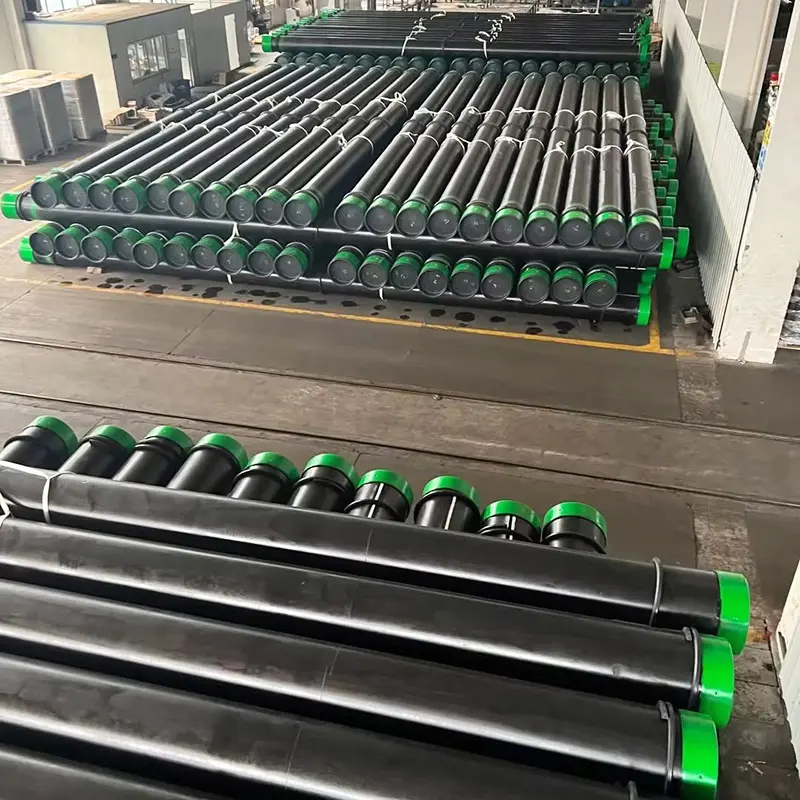
Moreover, oil casing plays a critical role in well control and blowout prevention. In the event of a well control incident, such as a blowout, the casing acts as a primary barrier to contain the pressure and fluids within the wellbore. This containment helps prevent uncontrolled release of hydrocarbons and minimizes the risk of environmental damage or safety hazards. The integrity of the casing is essential for effective well control and ensuring the safety of personnel and equipment on the rig.
In conclusion, the application areas of oil casing are diverse and essential for the successful operation of oil and gas wells. From providing structural support and zonal isolation to ensuring wellbore stability and blowout prevention, oil casing plays a critical role in enhancing well integrity and production efficiency. Its impact on the overall performance and safety of oil and gas operations cannot be overstated, making it a fundamental component of the industry.